Dent-Line of Canada Inc. Toll Free 1-800-896-6544 (for Canada only) 416-858-9865 or Fax No. 416-858-9899

Dent-Line of Canada Inc. Toll Free 1-800-896-6544 (for Canada only) 416-858-9865 or Fax No. 416-858-9899
A BULLETIN DEALING WITH ISSUES FOR DENTAL HEALTH PROFESSIONALS
Inside This Issue
1. Exchangeable Stud Extends Retention Life
2. Multisil-Soft Denture Relining System
3. Bredent’s Diagen Turbo Grinder
4. VKS Stud Replacement Kits
5. Creative Aesthetics with Gold Contouring Liquid
6. Technorama 2003
7. Trade News: Milling Course
 Exchangeable oc & sg studsPrecision attachments such as Dalbo / Swiss Mini, Ceka / Swiss Anchor or Split Roach Ball and many other precision attachments have their limitations. A recent study by M. Wichmann, DDS and W. Kunz, DDS “Wear Study of Attachments “Journal of Prosthodontics, 12 404-9, 1999 has determined that conventional metal attachments showed significant wear and retention loss. By contrast the plastic attachments showed only negligible friction loss and the most consistent retention force. In addition, replacement of the plastic inserts restored friction to the initial manufactured retention. Furthermore the study concluded wear induced loss of retention in attachment retained dentures poses a major clinical problem. To counteract this unwanted effect, most prefabricated precision attachments can be activated to restore wear induced loss of friction. This is achieved by design elements such as resilient metal tongues, partially or completely slotted male components or set screws. Over time activation of these metal male components will induce fatigue of the metal alloy followed by breakage of the retention elements, if they have not already worn out during daily function. The question is then how costly will it be to replace the existing abutment restoration with the same attachment system? Or should you consider another approach? A recent innovation by Bredent has revolutionized attachment systems. The existing VKS- OC/SG stud attachment has been engineered with a threaded screw and a reversed hex at the head of the stud, which can be rotated in or out of the restoration when necessary. This exchangeable stud will be able to be used vertically with the OC retention sequence or horizontally with the SG retention sequence. The exchangeable stud will extend the life of the restoration far beyond accepted parameters. The exchangeable stud can be replaced intraorally when the plastic retention sequence of green, yellow and red are exhausted. Indications for use are bilateral removable partial dentures, implant bar supported over dentures and root cap treatment over dentures. The exchangeable stud is made of titanium, whereas the retaining housing is offered in platinum / iridium or a gold, platinum/ palladium alloy. Procedures both clinical and technical are relatively simple. In the laboratory the exchangeable male stud and retaining housing are waxed to the abutments or bar following the path of insertion. Using the hexagonal screw driver the titanium stud head is rotated out of the threaded housing counter clock wise. Prior to investing the waxed abutments or bar, the retention stud must be replaced with the fixation pin. Colloidal Graphite is applied on to the threads of the fixation pin before investing so as to protect the integrity of the threaded housing as it is being held in place during the burnout and casting procedure. Later the casting is sand blasted and the fixation pin is turned out before porcelain application on the crowns. In the case of the bar or root caps treatment the stud is replaced into the housing and it is polished to a high luster with titanium polishing paste. The yellow retention sleeve is positioned on the stud and the model is prepared for duplication of the removable full or partial denture. Clinically, when the retention sequence is exhausted and the stud wears, it can be removed intraorally and replaced into the existing abutments or bar. Then a new retention sequence can commence. This procedure can be performed indefinitely, provided that proper maintenance of the restoration is carried out. Source; Peter T. Pontsa RDT. For further information contact us at 1-800-859-7589 or E-Mail: [email protected]
Multisil-Soft is a silicone denture relining material suitable for new and old restorations that are based on polymethyl-methacrylate material. The indicated range of usage is for cushioning of hard palate,as an over denture during the healing phase following implant placement , subsequent to multiple tooth extractions and to relieve pressure areas in the upper and lower jaw. Multisil-Soft is specifically for indirect preparation of full or partial dentures. It is packaged in dual cartridge auto mix format with dosing gun. Most types of acrylic based relining systems require messy handling procedures were as the Multisil-Soft has flow characteristics that allow rapid processing. When cured the material is permanently elastic and prolonged comfort of wear is a distinctive feature. To process this material the model and denture are placed into a reline unit. The areas of the denture to be relined is reduced by 2 mm then a chamfer 1 mm deep is prepared in the vestibular area 3 to 4 mm above the peripheral borders. The surface can be cleaned with oil free air. The master model is sealed with separator (e.g. Isoplast 54001019). Apply Multisil Primer onto all areas to receive the material and let dry three minutes. Then apply the Multisil-Soft uniformly and completely onto the prepared areas. At room temperature the material can be processed in approximately three minutes. Once the application is complete, the reline unit is closed and curing is either carried out under atmospheric pressure or in the pressure pot at 45â Celsius. Deflasking is carried out after hardening time of 15 minutes. Polymerizing in the pressure pot should be the preferred method since it increases physical values for the resin-silicone bonding system. When Multisil-Soft is totally cured it exhibits exceptional wear and tear. The functional margins and transitional zones are contoured using a scalpel or silicone bur (S237QG65). Alternatively there are two other silicone burs that can be used to finish other areas (S263QG60) and (S187QG23). Next apply Multisil Soft sealing agent onto the processed silicone areas and allow it to air dry. The sealing agent adds a permanent shine to the silicone surface and protects against accumulation of plaque and penetration of bacteria into the surface. Multisil-Soft has a shelf life of two years if it is stored in the original sealed container at room temperature under 28 C and protected against sunlight. The relined denture can be cleaned by the patient several times a day under running water with a tooth brush and a non abrasive soap. If an ultrasonic is used the denture must be placed in a zip lock bag with some water in it before being submerged in the cleaning system. Failure to do so will result in the reline material separating from the denture. Source; Peter T. Pontsa RDT, for additional information contact Dent-line of Canada Inc. at 1-800-859-7589

The “Diagen Turbo” is the most aggressive sintered diamond effective against Procera TM, Inceram TM, and all other ceramic materials. Each stone is molded under exacting conditions determined by Bredent to extract the optimum grinding properties. Diagen Turbo diamonds cut effectively down to the last layer. The diamonds remain in their optimum cutting positions at all times, because there is a mechanical and wetting link between the porcelain bonding material and the synthetic diamonds. This is carefully proportioned to ensure maximum cutting efficiency and minimal heat so that chipping is virtually eliminated. The prolonged service life in comparison to conventional sintered diamonds provides a higher efficiency and a wider range of applications. Visit us at www.dent-line.com. for more information or call us at 1-800-859-7589
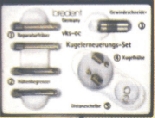 Over time, the VKS attachment stud may exhibit symptoms of wear, which leads to loss of retention of the denture. Customarily, the patient requires a remake of the abutment and the denture restoration. To avoid the additional costs and discomfort, the VKS attachment stud replacement has been developed. The kit is specific to gold alloys and is available to replace 1.7 mm and 2.2 mm studs. The instruments allow the worn VKS stud to be milled and threaded intraorally to a cylindrical post, over which a new titanium stud can be positioned and secured with adhesive. The procedure eliminates the need to restore the entire restoration and will extend the functional life of the prosthesis. Source; Dent-Line of Canada Inc.
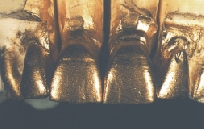
Whenever cosmetic type restorations are indicated, the aesthetics are paramount to a satisfied patient. Whether the restoration is a veneer, all ceramic or porcelain fused to metal, it should be shaped and contoured to match and co-exist with the existing natural dentition. In the situation were veneers or all ceramic restorations are processed, the restorations are divested from the mould with a Giflex diamond disc, then blasted with glass beads. When the restoration is adapted to the die, the porcelain layering can begin. The surrounding area should be insulated to prevent moisture from the porcelain from being absorbed into the die stone. The correct dentins, enamel and effect powders should be selected. A picture of the patient or a diagnostic model showing the original shape of the teeth would be a bonus. Shaping and building up of the restoration begins with the cervical layers of colored opacious dentin. The rest of the tooth is built up over the opacious dentin with the selected dentin material up to the incisal edge. The occlusal relationship is adjusted on the articulator to correct the bite. Using a smaller sized Kolinsky brush, the height of contour is layered with a dentin some what less intense in shading than the base dentin. For the application of the enamel, the incisal edge and the mesial and distal surfaces should be prepared through beveling using an appropriate carving instrument. The beveling should taper off gradually so as to avoid any noticeable joint between the body dentin and the enamel. The incisal area is layered with a combination of enamel dentin and transparent porcelains. At this point any information regarding decalcified areas or mamelon colors should be transferred to the ceramics so that it will produce the desired effects. These characteristics are then layered with transparent and enamel materials. After initial firing, the proximal contacts points are contoured and some tooth form modifications are ground with diamond instruments ( e.g. Sintered Diamonds), then enamel and transparent porcelains are added and fired again. Although the amount of shaping and contouring are kept to a minimum, the incisal edges need to be adjusted. The Bredent “Diagen Turbo” diamond grinders are ideal for contact points, shaping and contouring the overall anatomy. Aesthetically the labial surface highlights are emphasized by cutting vertical striations along the body from the neck up to the incisal edge. More characterization is also created by incorporating horizontal striations around the neck area of the restoration. Then the lingual highlights are detailed as well as determining occlusal function on the articulator. The over all appearance of the surface and tooth form is matched to the neighboring natural teeth using Bredent “Gold Contouring Liquid”. This liquid is painted over and onto the restoration and adjacent stone teeth, of the master model. It then dries to a fine gold powder and the surface and shape of the restoration can be evaluated. What happens to the eye is quite amazing, as the gold powder masks out the porcelain and die stone, the eye is not distracted by diverse color combinations and it can concentrate on concave plus convex contours and imperfections will be highlighted as a result. These imperfections or corrections of shape can then be carried out to improve tooth form by grinding or by adding more porcelain materials. The diagnostic model or picture will help finalize this exercise. The gold powder can then be removed with running water. The restoration is reinspected and then polished with diamond paste to achieve a natural appearance. Using Bredent’s” Gold Contouring Liquid” enables us to focus on aesthetic contouring and shaping over conventional methods. Source; Peter T. Pontsa, RDT
Dent-Line of Canada Inc. welcomes you to attend and join us at Technorama 2003. Canada’s largest Dental Technical Exhibition on Friday April 5th from 1:00 PM to 9:00 PM and on Saturday April 6th from 9:00 AM to 2:30 PM. The location is at the International Plaza Hotel and Conference Centre, 655 Dixon Rd., Toronto Ontario. Attendance to the exhibit floor and the wine and cheese party is free. The Denturist Association will be conducting a seminar on Quality Assurance on Friday and Mr.Renny Challoner will lecture on laboratory management on Saturday. A silent auction will also be held benefiting the Children’s Wish Foundation. Hotel reservations can be made by calling 1-800-668-7899. Technorama is presented annually by the members of the Dental Industry Association of Canada for lab technicians, assistants, denturists, lab owners and students.
Dent-Line of Canada Inc. Would like to congratulate the participants who completed the Bredent Vario Soft 3 attachment and milling course held this past November 9th and 10th at Lab Dentaire de l’Outaouais. Peter T. Pontsa, RDT (centre) facilitated the course while giving encouragement and guidance during the attachment placement and with the milling techniques.